.png)


Languages in Action: Civil Service
- Natalie Moore

- Sep 1, 2021
- 12 min read
Part of our role as Routes language ambassadors is to deliver presentations to students in schools across the West Midlands - personally this is one of my favourite responsibilities as an ambassador because you have the opportunity to change someone's outlook and maybe even inspire them to continue language learning at higher education.
When presenting to these schools, there are a variety of questions that come up quite often - one of the more frequent questions is 'what job can I do with a language?'. Young people seem to be under the impression that if you study a language at higher education, you only have two options; you can either be a teacher or a translator. Both are extremely rewarding roles, but not everyone who loves languages wants to follow these career paths. That is why it is imperative that we show the students we present to that there are a multitude of possibilities when you study a language, and that their life would not be limited to going in one of only two directions.
Recently, I have been in contact with employees from the Civil Service who have kindly offered their free time to talk to us about their roles and how languages have played a big part in their careers. We really hope that these stories will help inspire young people to pursue a career in languages!
Ailsa Weymes

We'll start with Ailsa Weymes, a Senior Inclusive Practice Adviser who works in the Civil Service Inclusive Practice for the Cabinet Office. Ailsa speaks French, German and Spanish.
Here is her language journey:
I learnt French from age 9 as part of the Nuffield Project of immersive French in the 1970's. My first introduction to French and it went from there. State primary.
[I did] German, French and Spanish at secondary comprehensive school
Languages have been the glue in my career and my passport to obtaining great roles in the UK and abroad.
During university summer vacations, I worked abroad to use and improve my language skills:-
Zermatt, Switzerland (1985) as a waitress in a hotel
Cote d'Azur (1986) Campsite courier on the coast for British and Dutch (luxury) camping hols. Problem solver, interpreter etc.
SW region of France (1987) Campsite courier for British holidaymakers on upmarket camping hols
1988
Post-graduation
1988-89
English Language Assistant in Zurich, Switzerland (British Council - one year post as a graduate)
1989
Management Graduate Trainee for NatWest PLC in Corporate Banking (in the City, London) on German Desk (global corporates - marketing and analysis and number crunching, legal docs)
1991
Relationship Manager on German/International Desk for Deutsche Bank AG, London - global corporates with English subsidiaries, legal docs, number crunching. Lots and lots of German spoken within the office and German branch network.
1993
Durham University - PGCE in French and German Secondary
1994
Teacher of German in high school in Northumberland - helped run MFL Languages Festival in 1995 in North-East. This might have been linked to Routes into Languages!
1996
Living in Paris, and headhunted by NatWest to join the Paris office in export credit and as Marketing Assistant to 3 Directors. Worked in French all day and met companies like Renault and Citroen to discuss financing needs for underdeveloped countries. Worked with CoFace (all legal and complex documentation in French). Brilliant job for a linguist who was using her languages as the everyday element of the role. [British husband, a fellow French and German graduate had got a job with the French Press Agency AFP, so we moved to Paris for his permanent role as a journalist and later editor).
2002
Taught French and German in a secondary state school in the UK (family expated to London by AFP in 1999)!!)
2002-2004
Lived in Berlin (moved with husband for AFP) and raised children. Voluntary work in the French school in Berlin which my children attended). Could operate brilliantly in both languages on everyday and bureaucratic procedures and relevant cultural norms.
2004-2006
(Native English level) Bilingual English and History teacher in private prestigious secondary school (11-18) in western suburb of Paris - St. Germain-En-Laye
2006-2007
Primary French teacher in British School (Kellett) in Hong Kong
2007 - 2009
Middle Years programme and IB teacher of French at the Chinese International School in Hong Kong. First teacher and then promoted to Head of Languages (French and Spanish) after 6 months. I learned basic Putonghua and Cantonese to get by.
2010 - 2011
Native Level English Language teacher (11-15) and Site Coordinator (head of British Section's presence in French school and French education system alignment). St. Germain-En-Laye - Lycée International de St. Germain-En-Laye. Renowned school and gets students into Oxbridge. French Baccalauréat and Option IB (English). Students do French system exams for everything except English and History which are at Pre-U level.
2012 - 2017
Head of Modern Foreign Languages and Oxbridge and Russell Universities Coordinator in independent sector school.
Won Linguascope competition over several years with help from the pupils of course!!!!
2018 - to date
Civil Service including a stint in the Foreign and Commonwealth Office where I worked in Europe region as a Desk Officer and used my languages all the time for that role at a very high level (ambassadors etc.) at the time of Brexit negotiations. Fabulous.
Language Learning
I learnt French (basic in a speaking only environment) aged 9 at school. Then picked it up to study aged 11 at my comprehensive school. Had a stellar teacher, so the grammar was just so easy. She was English and from the North-East. Did A Level. First ever visit to France was at university level - summer vacation! Astonished at university to meet bilinguals for the first time (didn't know they existed!!).
I learnt German from Year 9 at school to A Level. Did pen pal stuff in Year 10 and did a visit to the family in Bavaria in1982. First time ever abroad and did it alone. Another pen pal in Sixth Form came to visit me (and I her) via the well worn coach route. A Languages company organised that.
Spanish was something that I got put back on the curriculum (it had been taken off for German to replace it). I got 12 others to agree to start out with it at a lunchtime in Sixth Form and we (6) eventually did the exam a year later.
At university, I studied a mix of the traditional Literature and History options and my intake was the first year of a more language focused approach (spoken, interpreting and Politics and Business French). Move away from responses emphasis in English ie Literature and Thought essays. The new Chair of French was Prof. Anthony Lodge
At university, I participated in main roles in the German plays - put on by students at the Gulbenkian (professional and paying) theatre. These were in German and many schools attended as we mostly did plays on the A Level syllabus.
I also did the French one (Le Petit Prince) in a smaller role
I was Treasurer of the French Society and Secretary of the German one. I was also the Staff-student representative for the French faculty. It was a large faculty, I was just very active and engaged!!
Year abroad was great. I did 6 months in France in my year abroad at university (in the middle of one of the largest national strikes of rail network, gas and electricity, schools etc in the middle of winter).
I had the chance to be the first person to go to Halle University in East Germany from my university for my time abroad (5 months). Agreement had long existed but no-one had gone before. I wanted to see what it was like behind the Iron Curtain - not expecting it to come down a couple of years later. Very interesting studying books (Böll) that the GDR students could not read or get their hands on - they had to rely on the notes given by the lecturer. Travelled widely and went to Berlin via Friedrichstrasse crossing point at regular intervals for better food etc.
Advice for those thinking of studying languages in Higher Education
Particularly in the light of Brexit, foreign language speakers will be crucial to the success of the UK in trade and international relations and hopes of international experience abroad. The global pharma and engineering companies are European and primarily German. To get on and be effective, you need to be able to speak their language and importantly understand their culture. You will improve your employment prospects enormously as you will stand out from the crowd with a USP which shows adaptability and the ability to negotiate ambiguity and the unknown with confidence. Languages also improve salary prospects - particularly with German and French - look at the stats. Someone will sell to you in English, but if you want them to buy, you need to speak their language (in every sense).
Take a language as either your degree or a secondary subject. Give yourself that advantage and the world is your oyster.
I have had a great career (and still do!) and my languages and the skills that they bring have been integral to that. They make you a better, more rounded part of your employer's future.
Michael Howard
My name is Michael Howard. I have just started a career break. Before this, I was a Policy Adviser in the Investment Policy Team at the Department for International Trade. I speak Russian and some French. I taught English in the Russian city of Tomsk for two years after graduating from university. My Russian was very basic when I moved out there. I had lessons with a group of Mongolian students where I learnt the fundamentals of the grammar. Otherwise, I learnt through my own study and using the language as much as possible. Since returning home, I have taken lessons and regularly read and watch news, current affairs, literature etc in Russian. I find Youtube particularly useful.
I worked in corporate intelligence and investigations for around 6 years at PwC and freelance in Belfast and London. The corporate intelligence industry is a common destination for linguists. I carried out open source research in Russian as part of due diligence and investigation projects. For example, I carried out due diligence for a multilateral investment bank of a Russian oil and gas services company that was formerly owned by a well-connected and sanctioned Russian businessman. The bank was considering extending a loan to this company. The goal of the project was to provide the bank with a comprehensive picture of the company's history, activities and any adverse information (e.g. fraud allegations, sanctions exposure) relating to the company. I researched legal documents, media, corporate records and other sources in Russian. I also translated information obtained by a Russian subcontractor who consulted human sources in Russia with knowledge of the company. I collated the intelligence into a due diligence report for the bank. In this role, it was important to not only have the language skills but also knowledge of the political and business environment of Russia and the wider region. As pretty much the only Russian speaker in PwC's Belfast office when I first joined, my language skills were in demand across the department. For example, I would regularly contact Russian universities to obtain information for the employment screening team. My Russian language skills also came in handy when I worked as an election observer in Ukraine for the 2019 presidential elections.
My passion for languages comes from a strong interest in other cultures, world literature, and the study and history of languages. I'm fascinated, for example, in the etymology of English. In truth, I found language learning at school - I learnt French, Spanish and Italian - a bit of a struggle (I'm not a natural linguist) and not particularly inspiring. Only when I started travelling and reading more for pleasure was I more motivated to learn languages. I studied Italian for 3 months in Florence between school and university. My desire to learn Russian came from a strong interest in Russian literature and history that started at a young age.
There are many benefits. Knowledge of languages and different cultures undoubtedly increases your career opportunities and makes you more attractive to potential employers. It can broaden your horizons and provide opportunities to meet new people. Personally, I get a lot of pleasure from speaking and learning Russian, being able, for example, to read my favourite Russian authors in the original.
Joseph Payne
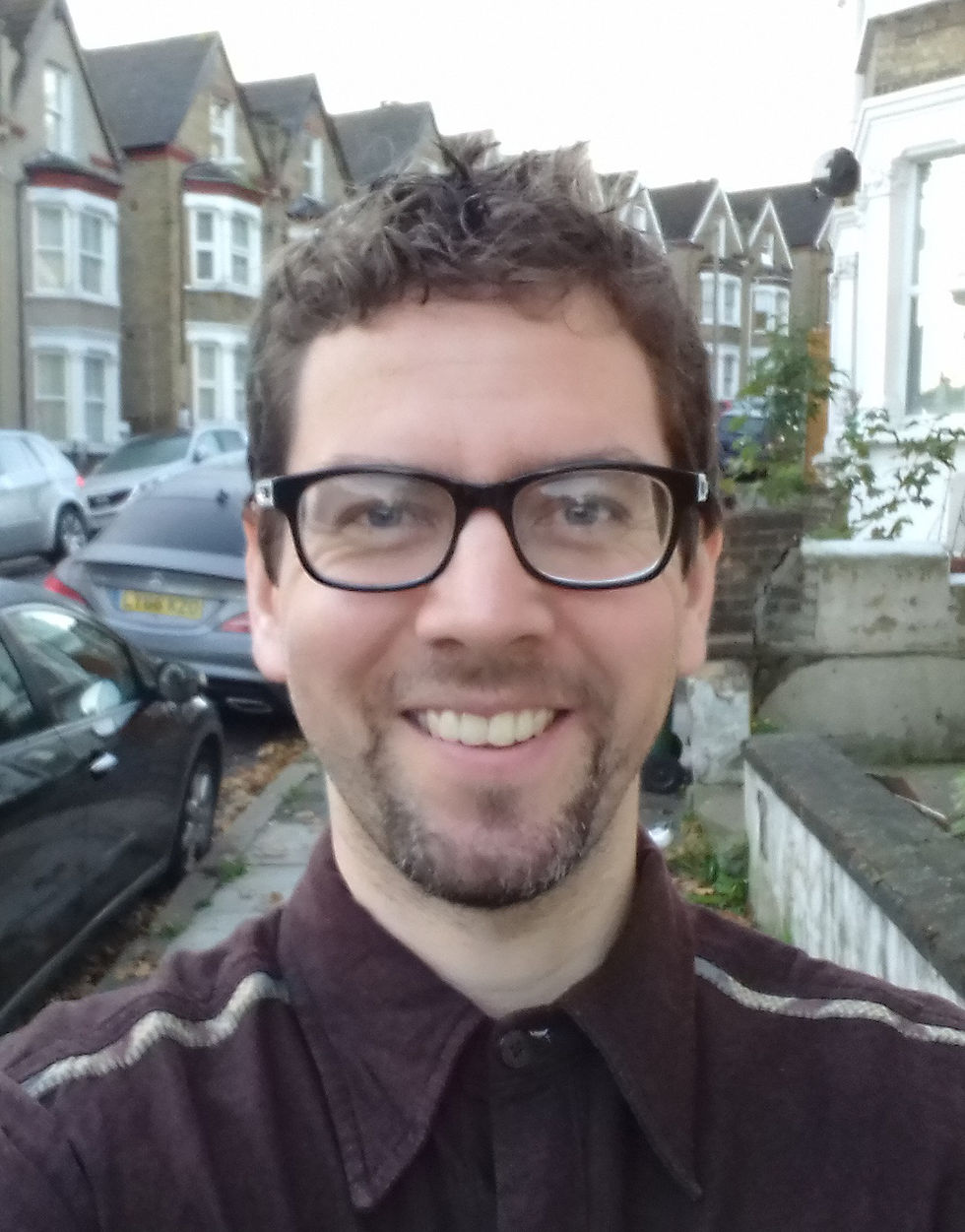
Finally, we spoke to Joe Payne who works for the Civil Service finance fast stream and speaks Swahili.
Routes: How did you learn Swahili?
I started learning from a phrasebook during a 4-month overseas volunteering placement in Kenya (which I extended to last 6 months). At that point, I was just trying to learn a bit to enhance my interaction with Kenyans, but I inadvertently awoke my dormant linguistic abilities (six and a half years after I completed my German GCSE)!
Back in the UK, I found my dad had picked up a second-hand copy of Teach Yourself Swahili book and cassettes (as a 'joke'), but I studied the whole course over the next few months. I was working full time, so I primarily did this in my bedroom in the evenings, strictly enforcing a half-hour daily minimum of study (always noting and catching up on any sessions I missed).
Having completed the course in the absence of any conversation practice, I managed to arrange a further 3-month volunteering opportunity in Tanzania (again managing to extend it, adding another 4 months back in rural Kenya), during which my Swahili made great leaps forward. A key ingredient of my success was doggedly pursuing Swahili conversation, even when locals (understandably) wanted to practise their English! I also bought myself a Swahili-Swahili dictionary - to reduce my reliance on my bilingual one - and made sure to buy a handful of Swahili novels before I returned home.
While I studied for a (unrelated) Masters in Edinburgh, I was able to volunteer as the main teacher at the University's Swahili Club; then, after 3 more years in the UK, I was lucky enough to get a job in Tanzania and ended up living, marrying and having a child in Dar es Salaam, returning home again after over 7 years.
Routes: You worked in the British High Commission in Tanzania for 6 years where you used your language skills - can you tell us a bit about this opportunity?
Before the High Commission job I worked for a small Tanzanian company. I got that job through Tanzanian friends I made in Edinburgh, where I desperately wanted to continue improving my Swahili after returning from my second volunteering stint in East Africa. The company had a property maintenance contract with the UK Department for International Development (DFID), looking after UK staff's residential housing in Dar es Salaam; so my employers clearly saw the value of a Brit who would be able both to relate to their client and to communicate effectively with his local staff!
After a year in that job, I wanted to remain in the country, but was keen to get a job that was a bit more secure (and relaxed!); so when I found out I could apply for a local Projects Officer job at the British High Commission, I decided to go for it! Given I had been in competition with Tanzanians for the job, I think the High Commission had to use a little diplomatic persuasion to ensure I would be granted the requisite work visa (a process which then had to be repeated annually), but I remained there for over 6 years, moving into a DFID role a couple of years later, and achieving a further internal promotion two years after that.
Routes: There was no formal requirement for you to speak Swahili in your job role - what made you want to learn it during your time there even though English would have sufficed?
My Swahili was already fairly fluent by the time I got my job at the High Commission: my previous job had seen me leading a team of Tanzanian plumbers, electricians and carpenters - most of whom spoke little English - so that was fantastic for building on all my previous experience. This, and living in a 'normal' area of Dar es Salaam, taught me so much about real Tanzanian life, as well as enhancing my language; indeed, I learnt a lot about the prevalence of Swahili slang and how different it was from what I found in my dictionaries - a further challenge!
While I had needed some Swahili proficiency for my first High Commission role, at DFID I was working with mainly middle-class, more highly educated Tanzanians and the office was run entirely in English (there was no requirement for diplomatic staff to learn Swahili before taking up posts in Tanzania). However, Tanzanian staff generally spoke Swahili (often mixed with English) among themselves, and, as a locally employed member of staff like them, I wanted to show I could hold my own! In fact, they often viewed me as more competent in formal Swahili than they were, and I was occasionally asked to assist informally with translation and even some interpretation (both consecutive and simultaneous) at all-staff events! Equally, I could be particularly valuable to my British colleagues when on field visits to project recipients in rural areas. On one occasion, I also held a fun Swahili learning event for UK staff and I even offered my services as a teacher when a new High Commissioner came into post (though in the end, she decided to hire someone with no connections to her day job...).
Routes: What would you say to encourage people to take up language learning?
Language learning can be a window into understanding completely new ways of life, meeting new people and having amazing new experiences: you can get a completely different experience of a foreign country by having at least some competence in their language. In particular, in a poorer country, with greater linguistic inequality, it is the best way to be able to learn about the lives and experiences of the majority of the population. I also believe it is fantastic for the brain, training memory (for vocabulary), imitative ability (for accents) and logical faculties (for grammar), as well as requiring great concentration, particularly when trying to understand a native speaker!
Finally (although this will obviously not happen to everyone), I even managed to combine my Swahili fluency with my musical ability to become a contestant in Tanzania's Bongo Star Search TV singing competition in 2010, ending up finishing in third place - but that is another story...
~~~
Three amazing languages stories that show just a snippet of the brilliant careers that language learning can lead to! We'd like to say a big thank you to Ailsa, Michael and Joseph for taking the time to answer our questions and wish them the best for their futures with languages!


Comments